
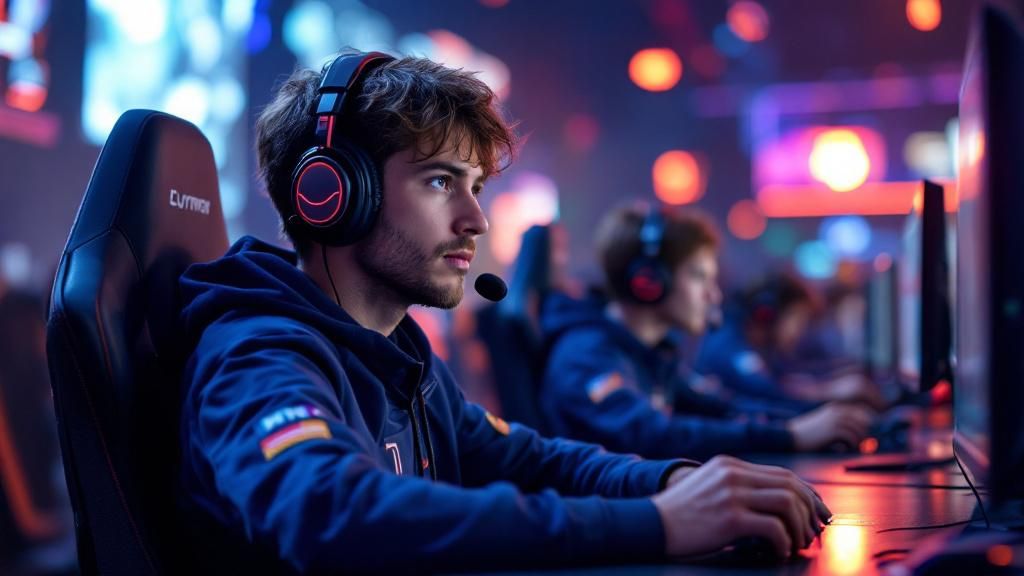
The esports industry has taken a significant step forward in prioritising competitor wellbeing. Major tournament organisers have collectively introduced a extensive competitor welfare framework, tackling longstanding concerns about psychological wellbeing, employment standards, and equitable treatment within competitive esports. This groundbreaking development marks a critical juncture for esports legitimacy, setting foundational safeguards that could transform how the industry operates. We examine the framework’s central components, the entities leading this transformation, and what it means for competitors and the esports ecosystem in the future.
Comprehensive Industry Pledge to Responsible Gaming
The joint initiative between leading esports organisations marks a watershed moment for competitor welfare within esports competition. This integrated system demonstrates the sector’s real dedication to developing enduring guidelines that prioritise competitor wellbeing alongside performance quality. By combining knowledge and capabilities, these organisations have established thorough standards addressing physical health, mental wellness, and professional security. The programme demonstrates increasing awareness that competitor health substantially impacts output standards and career longevity, making it essential for the industry’s standing and expansion.
Tournament operators have recognised that earlier guidelines were scattered and uneven, putting athletes at risk of exploitation and burnout. The revised structure creates uniform requirements throughout leading tournaments, guaranteeing all professional athletes receives equitable treatment and availability of vital assistance. This integrated system eradicates unequal conditions resulting from differing safeguards and sets fair competition standards. Industry experts emphasise that these standards constitute baseline expectations, prompting entities to go beyond minimum standards and foster genuinely supportive environments where competitors can excel in career and personal development.
Core Features of the Social Support Framework
The newly established welfare framework comprises several interconnected pillars intended to ensure player protection comprehensively. These provisions tackle mental wellbeing assistance, physical wellbeing, fair working conditions, and transparent dispute resolution mechanisms. By integrating these elements, tournament organisers seek to establish an integrated system that acknowledges esports athletes as professional athletes entitled to comprehensive protections. The framework defines baseline requirements that all associated competitions must implement, ensuring uniform player protections across the competitive gaming landscape.
Mental Wellbeing Assistance Programmes
Recognising the emotional demands characteristic of professional esports, the framework mandates availability of mental health professionals for all competing players. Event organisers are required to provide confidential therapy services, through direct delivery or collaborative arrangements with accredited mental health professionals. These services encompass managing stress, performance anxiety support, and emergency intervention services. Players receive access to experienced psychologists who comprehend esports-specific issues, such as online harassment, intense competitive pressure, and career uncertainty.
The framework further requires tournaments to establish psychological awareness schemes and anti-stigma campaigns across the community. Organisers must train players, coaches, and staff about identifying psychological difficulties and obtaining appropriate support. Regular check-ins and wellbeing tracking mechanisms help spot struggling players early, facilitating proactive intervention before situations escalate into critical psychological situations.
Physical Health Requirements
Tournament coordinators must create comprehensive physical health standards tackling ergonomics, recovery intervals, and medical oversight. The framework stipulates appropriate chairs, screen placement, and rest periods to minimise repetitive strain injuries common among esports professionals. Healthcare professionals must be on-site at large-scale competitions to manage pressing health problems, whilst organisers are mandated to provide information about harm prevention and proper healthcare support for sustained athlete progression.
Environmental factors at tournament venues are now covered under strict standards ensuring player comfort and safety. Regulations address temperature control, lighting standards, and noise levels to deliver optimal performance conditions. Additionally, the framework encourages players to undergo routine medical evaluations and provides guidance on diet, sleep hygiene, and exercise routines crucial for sustained professional performance in esports.
- Workplace gear assessments performed by qualified specialists
- Mandatory rest periods during competitions reducing athlete fatigue
- Medical personnel on location present during all competitive events
- Injury reduction education and recovery programme access
- Health monitoring programmes monitoring athlete health across the year
Rollout Schedule and Standards
The framework will be rolled out in three distinct phases, starting immediately with preliminary assessments across involved stakeholders. Tournament operators have pledged to completing first audits of their existing operations by the conclusion of Q1, pinpointing differences between present frameworks and the updated requirements. This foundational phase ensures a thorough understanding of each organisation’s starting point before introducing significant modifications. Following phases will involve team training, procedural revisions, and the establishment of autonomous monitoring systems to ensure adherence and accountability throughout the esports industry.
The standards themselves encompass mandatory provisions relating to mental health support, reasonable practice schedules, and open reward distribution systems. Each organisation is required to appoint a designated welfare champion tasked with handling grievances and upholding guidelines. Periodic reviews, performed by third-party bodies, will assess conformity and identify areas requiring improvement. These thorough safeguards set defined targets for player safeguarding, with regulatory tools including monetary sanctions and potential tournament sanctions for organisations not meeting required standards.
Sector Response and Future Perspective
The initiative has attracted strong backing from participants throughout the esports ecosystem. Players’ associations have endorsed the guidelines as a essential move towards elevating the professionalism of the sector, whilst organisation proprietors and financial backers recognise the opportunity for greater credibility and long-term viability. Equipment suppliers and streaming platforms have undertaken to integrate welfare considerations into their operations, illustrating a unified resolve to structural reform. Initial signs indicate that regulatory bodies and state representatives perceive the guidelines with approval, possibly opening the door to legislative recognition of competitive gaming as a established professional field.
Looking ahead, sector analysts anticipate that this framework will serve as a template for worldwide implementation, with regional tournaments and smaller competitions set to implement comparable standards. The programme is expected to inspire continued dialogue regarding player compensation, professional progression routes, and mental health resources. As esports undergoes rapid expansion, these player protections represent a vital protection mechanism guaranteeing that competitive gaming stays viable, welcoming, and considerate for all participants, in turn strengthening the industry’s standing as a legitimate competitive sector.
